Hackettstown Gutter Installation for Better Water Flow and Fewer Repairs


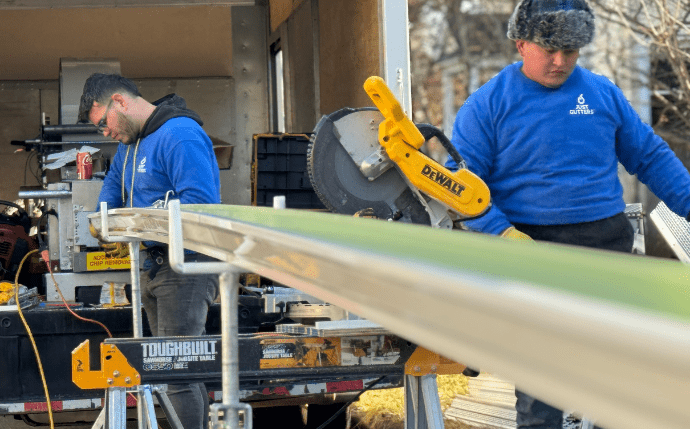
Water rarely causes trouble all at once. More often, it starts small. A splash line at the base of the siding. A dark patch along the fascia. Soil that keeps washing out near one corner of the house. A basement wall that feels damp after a hard storm. By the time those signs are easy to spot, runoff has usually been going in the wrong direction for a while.
That is why good gutters matter so much in Hackettstown. They are not decorative trim. They are part of the drainage system that protects the roof edge, siding, windows, foundation, walkways, flower beds, and in many cases the basement. When Gutter Installation is done well, rainwater moves quickly, exits where it should, and stays away from parts of the home that were never meant to handle repeated saturation. When it is done poorly, even a newer roof and solid siding can start showing stress.
Homeowners often focus on visible repairs first. They replace a stained section of soffit, repaint peeling trim, or patch a settling walkway. Those fixes may help for a season, but if runoff is still overshooting, backing up, or dumping too close to the foundation, the same problems usually return. Proper Gutter Installation Hackettstown homes can rely on is less about hanging aluminum along the roofline and more about controlling water from the moment it leaves the shingles to the moment it disperses safely away from the house.
Why gutters fail sooner than people expect
A lot of people assume gutters only wear out because they get old. Age matters, but it is rarely the only reason a system underperforms. In practice, failure usually comes from a combination of poor pitch, undersized downspouts, loose fasteners, clogged channels, bad transitions at corners, and runoff volume that was underestimated from the start.
Hackettstown sees a mix of seasonal weather that puts real demands on gutters. Heavy spring rains test carrying capacity. Summer storms can dump a surprising amount of water in a short time. Fall leaves slow drainage and create backups at outlets. Winter freeze-thaw cycles add weight and stress, especially when debris holds standing water in place. If a gutter system was installed with minimal slope or too few downspouts, that weather pattern exposes the weaknesses fast.
I have seen houses where the gutters looked acceptable from the driveway, yet water marks under the seams told a different story. In other cases, homeowners thought the roof was the issue because water was dripping near the front door, when the actual problem was that a downspout at the corner could not keep up during intense rainfall. Water traveled backward, spilled over the lip, and followed the path of least resistance. It felt like a roof leak, but the fix was in the drainage design.
That distinction matters because a repair and a replacement are not always the same decision. Sometimes resecuring a loose run and improving pitch is enough. Sometimes the system was undersized from day one and patchwork repairs only prolong the frustration.
The connection between better water flow and fewer repairs
The best gutter work often goes unnoticed. That is the point. When rainwater moves cleanly through the trough, into the outlets, down the spouts, and out beyond the foundation zone, a long list of avoidable repairs tends to shrink.
Overflow at the eaves can rot fascia boards and soften soffit panels. Water that runs down siding leaves stains, encourages mildew, and can seep around trim joints. Splashback near the ground chews up mulch beds and trenches the soil. On hard surfaces, runoff can undermine paver edges or settle concrete over time. At the foundation, repeated saturation increases the chance of seepage, especially where grading is less than ideal.
Good Gutter Installation in Hackettstown helps break that chain. The goal is not simply to catch water. The goal is to manage volume, maintain flow, and direct discharge far enough from the house that the soil has time and space to absorb it without causing damage. That usually means paying attention to slope, outlet placement, downspout count, and extension length, not just color and price.
Homeowners sometimes ask whether gutters really affect maintenance costs in a meaningful way. In my experience, yes, especially over a span of years. One modest gutter correction can prevent multiple categories of repair. It is far less expensive to route water properly than to replace rotted wood trim, repaint stained surfaces, regrade settled soil, or address repeated moisture issues in a lower level.
What proper installation actually looks like
A well-installed gutter system begins with measurement, but not just linear measurement. Roof area, pitch, valleys, and local rainfall intensity all influence how much water a section will need to handle. A short run under a steep roof valley can carry more water than a longer run on a simpler roof plane. That is why two homes with similar square footage may need different gutter layouts.
Pitch is one of the most important details. Too little slope and water sits in the trough, collecting sediment and straining the fasteners. Too much and the system can look crooked while still draining unevenly. The right pitch is subtle, enough to encourage flow toward the outlet without being obvious from the ground. Installers who rush this step often leave homeowners with standing water that becomes a maintenance problem almost immediately.
Fastening method matters too. Older spike-and-ferrule setups are common on aging homes, but they loosen over time, especially when gutters fill with debris or ice. Hidden hangers with screws typically provide a more secure attachment when installed correctly into sound fascia. That does not solve every problem, but it improves stability and reduces the chance of sagging sections.
Seams and corners are another common trouble spot. Every joint is a potential leak point. That is one reason many homeowners prefer seamless gutters for the main runs. Seamless does not mean leak-proof forever, but it reduces the number of joints along the length of the system. Corners and end caps still require care, and those details separate durable work from work that looks fine only on day one.
Then there are downspouts, which are often treated as an afterthought even though they do most of the visible work. A gutter can only perform as well as its outlets allow. If downspouts are undersized, poorly placed, or terminated too close to the house, the system remains vulnerable even if the trough itself is new.
Materials and profiles, where judgment matters
There is no single best gutter material for every house in Hackettstown, but there are common choices that fit most homes and budgets. Aluminum remains popular because it is relatively lightweight, resists rust, comes in many colors, and suits seamless fabrication well. Steel is stronger in some respects but can be more vulnerable to corrosion if coatings fail. Copper is durable and attractive, though its cost puts it in a different category altogether.
Profile matters as much as material. K-style gutters are widely used because they carry a good volume of water and match many residential rooflines. Half-round Gutter Installation Hackettstown gutters can work beautifully on certain homes, especially historic or architecturally distinctive properties, but they may require more deliberate support and design choices. The right fit depends on both performance and appearance.
Here is where experience helps. A homeowner may prefer the look of a smaller profile, but if the roof area and valley concentration demand more capacity, appearance alone should not drive the decision. On the other hand, oversizing everything without considering roofline scale can make the exterior look heavy and mismatched. The best result usually balances drainage needs with the character of the home.
Signs your current system is no longer doing its job
Some warning signs are obvious. Water pouring over the front edge during every storm is one of them. Others are easier to miss. A gutter can still be failing even if it is not visibly detached.
A few issues show up again and again:
- water spilling over in only one section, often because the pitch is off or the outlet is restricted
- gutters pulling away from the fascia, which points to loose fasteners or weakened wood behind them
- peeling paint, soft trim, or staining near the roof edge
- puddling near the foundation after ordinary rainfall
- downspouts that discharge too close to walkways, basement walls, or planting beds
When several of these appear together, the problem is usually larger than a simple cleaning. That does not always mean a full replacement, but it does mean the system should be evaluated as a whole.
Why local conditions in Hackettstown change the conversation
Hackettstown homes are not all the same, and neither are their drainage demands. Older houses may have fascia boards that need repair before new gutters can be securely mounted. Some neighborhoods have mature trees that dramatically increase leaf load in the fall. Others have grading that sends water back toward the structure unless downspout discharge is extended and redirected carefully.
Snow and ice also deserve attention. Gutters are not designed to hold heavy ice for long periods, and no installation can fully overcome the risk created by roof melt and refreeze. Still, proper pitch, secure hangers, and sensible runoff planning reduce stress. If a house has a history of ice buildup at the eaves, the conversation may need to include ventilation, insulation, and roof edge conditions, not just new gutters. That is one of those cases where honest assessment matters more than a quick sale. A gutter contractor can improve water management, but gutters alone cannot correct every roof-related moisture issue.
Storm intensity has changed how many homeowners think about drainage. A system that seemed adequate during moderate rain may struggle during short, heavy downpours. That is why current performance, not just age, should guide decisions. If the gutters repeatedly overflow during storms that are now common, capacity may need to be revisited.
Repair or replace, how to make the call
This is where many homeowners hesitate, and reasonably so. If a system can be repaired well, replacement may be unnecessary. But small fixes lose value when the underlying layout is flawed.
Repair often makes sense when the gutters are fairly new, the material is still sound, and the issues are limited to a few areas such as loose hangers, a leaking corner, or a clogged outlet. If the fascia behind the gutter is healthy and the runs are properly sized overall, targeted work can restore function.
Replacement tends to make more sense when the system has widespread sagging, repeated seam leaks, chronic overflow, or poor downspout placement that keeps causing trouble. It also becomes the better option when gutters are being removed repeatedly for spot fixes, because labor adds up fast. A pieced-together system can become more expensive over three or four service visits than one proper installation.
One of the clearest signs that replacement is justified is when water problems continue after cleaning and minor repair. At that point, the issue is often design-related. The house may need different outlet spacing, larger gutters, more downspouts, or improved discharge routing.
The installation process homeowners should expect
A professional installation should feel organized from the first visit. Measurements are taken, but so are observations about roof planes, valleys, splash zones, and where water can safely exit. A good installer notices the practical things, where ladders can be set safely, whether shrubs block downspout paths, whether a lower roof section causes concentrated runoff, whether existing splash blocks are doing anything useful.
Removal of old gutters should be done with care because fascia condition is often revealed only after the system comes down. If wood is soft, split, or previously patched, it should be addressed before new hangers go in. Mounting a new system on compromised wood is one of those shortcuts that looks fine until the next season of heavy rain.
Once the new runs are fabricated and hung, the workmanship should be visually clean and mechanically sound. Lines should look straight, pitch should be consistent, and downspouts should be located where they can drain effectively without creating trip hazards or dumping water onto neighboring areas. Sealant should not be doing the job that slope and fastening are supposed to do.
Before the crew leaves, water testing or at least a practical check of flow is worth doing. That final step catches problems while ladders and tools are still on site. It also gives the homeowner confidence that the work was done for function, not appearance alone.
Questions worth asking before hiring a contractor
Price matters, but it should not be the first filter. Gutters are one of those trades where a low bid can hide thin metal, minimal hanger spacing, poor outlet planning, or rushed installation. A system that costs less upfront may cost more in callbacks and repairs.
A few smart questions help separate careful contractors from fast sellers:
- What size gutters and downspouts do you recommend for this roof, and why?
- Will the main runs be seamless?
- How do you handle fascia damage if it is uncovered during removal?
- Where will the downspouts discharge, and how far from the foundation?
- What kind of hanger spacing and fastening method do you use?
The answers should sound specific, not generic. If someone cannot explain pitch, outlet placement, or runoff routing in plain language, that is a concern. Good installers usually enjoy talking through these details because they know that performance depends on them.
Gutter guards, worthwhile or overpromised?
Gutter guards come up in almost every conversation, especially on properties with trees. They can reduce the frequency of cleaning, but they are not a universal fix. Performance depends on the type of debris, the roof slope, the guard design, and how well the underlying gutter system is installed.
On some homes in Hackettstown, guards are helpful because they keep larger leaves out while allowing water through. On others, fine debris such as seed pods and granules still accumulates and requires maintenance. In winter, certain guard styles may complicate ice behavior rather than improve it. That does not make them bad products, but it does mean expectations should stay realistic.
The best approach is to treat guards as a maintenance aid, not a substitute for a properly sized and properly pitched gutter. If the base system is wrong, adding a cover on top rarely solves the core issue.
Cost, value, and what homeowners are really paying for
It is tempting to compare gutter prices by the foot and move on. That only tells part of the story. Cost reflects material, profile, color, number of corners, number of stories, accessibility, downspout count, fascia condition, and whether custom routing is needed to move water away from trouble spots.
What homeowners are really paying for is water control. A well-designed system reduces the chances of repeat maintenance on trim, foundation edges, landscaping, and lower-level moisture areas. The return is not always dramatic in one season, but over time it is easy to see. Less staining. Fewer puddles. Better soil stability. Less worry during a hard storm.
For many properties, the value of Gutter Installation Hackettstown homeowners can trust lies in preventing damage that would be much more expensive to correct later. That is especially true when a house already shows early signs of runoff problems. At that stage, gutters are not just an upgrade. They are part of the repair strategy.
Maintenance after installation still matters
Even an excellent gutter system needs occasional attention. Branches fall. Leaves collect. Downspout elbows catch debris. Sealants age. Fasteners can loosen over time. The difference is that a well-installed system responds better to maintenance and gives fewer surprises between service intervals.
For most homes, annual inspection is a sensible baseline, with additional checks after major storms or if nearby trees drop heavily in autumn. Watch for isolated overflow, changes in discharge at the bottom of the downspout, or new staining on siding. Those small clues are often the first sign that something needs attention.
It also helps to look at the ground, not just the gutter itself. Eroded mulch, washed-out gravel, and persistent wet spots near a corner of the house often reveal drainage problems before the gutter line does.
Better gutters are really about protecting the whole house
When people think about exterior upgrades, gutters rarely carry the appeal of a new roof, fresh siding, or replacement windows. Yet they do something those systems rely on every single time it rains. They manage movement. They take water that would otherwise strike the house and direct it away with purpose.
That is what makes quality Gutter Installation so practical. It is not a flashy project. It is a defensive one. In Hackettstown, where homes deal with changing seasons, tree debris, freeze-thaw stress, and bursts of heavy rainfall, that kind of protection pays off quietly and repeatedly.
A gutter system that flows well does more than keep the edges of the roof tidy. It reduces wear on materials that are expensive to replace. It helps preserve the foundation zone. Gutter Installation Hackettstown It protects landscaping from unnecessary washout. It limits the conditions that lead to staining, rot, and moisture headaches.
For homeowners in Hackettstown, the smartest gutter decision is usually the one that treats water control as a whole-house issue. When the system is measured correctly, installed with care, and matched to the roof and site conditions, the result is simple in the best sense of the word. Water goes where it should, and the house asks for fewer repairs because of it.
Just Gutters LLC
Address: 262 Main St, Hackettstown, NJ 07840
Phone number: +12013319454
FAQ About Gutter Installation Hackettstown
Can I install a gutter myself?
Yes, you can install gutters yourself. DIYers typically use aluminum or vinyl sections from home improvement stores. The project requires basic tools, precise measuring, and comfort working on ladders. Key steps include snapping a chalk line for a slight slope (1/4 inch per 10 feet toward downspouts), securing hangers every 2 feet, and caulking all joints securely.
How much does body contouring usually cost?
The Home Depot typically charges between $1,000 and $3,600 for a standard professional gutter installation on a typical single-family home with 200 linear feet of gutters. Calculated on a per-foot basis, the cost usually ranges from $5 to $18 per linear foot, highly dependent on the material you select.
How much does a 40 ft seamless gutter cost?
A 40 ft seamless gutter run will cost between $240 and $1,120+ fully installed, depending on the material you choose. Because seamless gutters require specialized on-site fabrication machines, they are rarely sold as DIY kits and are priced per linear foot.