Gutter Repair Hackettstown to Minimize Exterior Wear and Tear


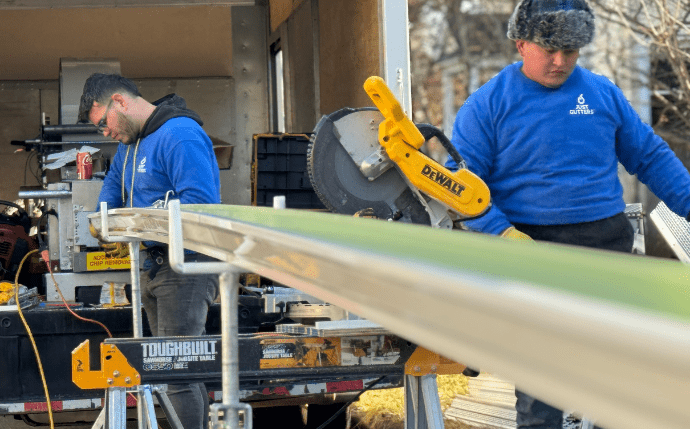
A house does not need a major roof failure to start taking on water damage. In many cases, the first problem starts lower, at the gutters. When gutters pull away from the fascia, clog with debris, or dump water too close to the foundation, the damage spreads slowly and quietly. Paint blisters. Trim softens. Mulch washes out. Basement corners grow damp. Siding stains appear where there used to be clean lines. By the time those symptoms show up, the repair bill is often larger than it needed to be.
That is why Gutter Repair Hackettstown homeowners invest in is not a cosmetic service. It is preventive maintenance with real structural value. In a place like Hackettstown, where homes see heavy spring rain, summer storms, leaf drop in the fall, and freeze thaw cycles in winter, gutters work hard. They have to move a surprising amount of water quickly, and they have to do it without leaking, sagging, or backing up under the shingles.
When that system fails, the entire exterior begins to wear faster. Some of that wear is visible right away. Some of it builds one season at a time. Either way, gutter problems rarely stay confined to the gutter itself.
Why small gutter issues turn into bigger exterior problems
A lot of homeowners assume a gutter is either broken or fine. In practice, there is a middle ground where the gutter still exists, still catches some runoff, but no longer controls water well enough to protect the house. That in between stage is where the most unnecessary damage happens.
Take a common example. A gutter section starts to pitch the wrong way after a hanger loosens. Water no longer drains fully to the downspout. Instead, it ponds in the middle, especially after a storm. That standing water adds weight, which pulls the section down further. Eventually, the front edge dips low enough for water to spill over. Now the soil below gets hammered during every rain. The splashback hits the siding. If the overflow is near a window, the trim sees repeated wetting. None of this looks dramatic at first. Six months later, the paint fails. Two years later, the wood underneath may need replacement.
That pattern is common because water is patient. It does not need a single large opening to cause trouble. It only needs repetition.
Hackettstown homes also deal with a broad mix of materials and ages. Older homes may have wood fascia boards and trim that are less forgiving when moisture lingers. Newer homes may have vinyl siding that hides the early signs of water intrusion, while the sheathing behind it takes the hit. Either way, a gutter that does not drain cleanly creates stress far beyond the metal channel you can see from the driveway.
The local weather factor in Hackettstown
Gutter performance is highly local. The same system that works acceptably in a milder climate can struggle in northwestern New Jersey conditions. Hackettstown gets strong seasonal swings, and those swings matter.
In spring, gutters often receive heavy runoff while still holding leftover debris from winter. A minor clog in April can cause immediate overflow when a cold rain sits on compacted leaves and grit. Summer thunderstorms add another challenge. Short, intense downpours test capacity and reveal weak seams, undersized downspouts, or improper slope. Fall brings its own issues as leaves, seed pods, and twigs build up fast, especially on homes near mature trees. Then winter arrives, and every area that failed to drain properly becomes vulnerable to freezing.
Freeze thaw cycling is especially rough on gutters and attachments. Water trapped in low spots expands when it freezes. Sealants crack. Seams separate. Hangers loosen. Ice adds load along the roof edge, and gutters that were merely stressed in November can look visibly distorted by February.
That is one reason Gutter Repair Hackettstown property owners schedule before winter tends to pay off. A repair that seems minor in mild weather can become much more expensive after a season of ice and standing water.
What gutter damage actually looks like in the field
Not every failing gutter is obviously falling off the house. Some of the most important warning signs are subtle. A trained eye usually notices patterns rather than one dramatic symptom.
Overflow marks are one clue. If you see dark vertical streaks on siding or greenish staining near corners, water has probably been escaping the channel repeatedly. Another clue is soil displacement below the eaves. If your mulch washes out after every storm, or if gravel trenches develop along the foundation line, the runoff is not being controlled where it should be.
Inside the gutter itself, the condition of the metal tells a story. Rust spots around fasteners suggest standing water or failed protective coatings. Open seams at joints show movement, which often traces back to poor support or freeze damage. Nails or old spikes backing out of the fascia indicate the fastening method is no longer holding under load. Sagging sections between hangers mean the spacing may be wrong, the wood backing may be compromised, or the gutter has simply carried too much weight for too long.
Downspouts also deserve attention. A gutter can be clean and intact but still fail if the downspout is undersized, clogged at the elbow, or discharging too close to the home. I have seen houses with decent rooflines and decent gutters suffer chronic basement dampness because the downspouts ended one foot from the foundation. The gutter was doing half the job. The other half was undoing it.
The fascia and soffit connection most owners miss
Many exterior repairs that get blamed on "weather" are really moisture management issues. Fascia boards are especially vulnerable because gutters are fastened directly to them. If a gutter leaks at the back edge or overflows repeatedly, that wood stays wet far longer than it was designed to.
Once fascia begins to soften, the gutter loses its anchor. That creates a cycle. Weak wood allows movement. Movement creates more leaking. More leaking keeps the wood wet. If the problem continues, nearby soffit panels can also trap moisture, and insects may exploit the softened areas before the homeowner realizes there is decay.
This is where experience matters. Reattaching a loose gutter to damaged fascia without addressing the substrate is a short term fix at best. It may hold for a while, but it does not restore the load path. A proper repair sometimes means replacing sections of fascia, then reinstalling hangers into sound material with the correct spacing and pitch. That is less visible from the street than a new paint color, but it does far more to preserve the exterior.
How poor drainage affects foundations, walkways, and landscaping
Most people think of gutters as a roof accessory. They are really part of the site drainage strategy. Their job is to collect roof runoff and send it to a controlled discharge point. When they fail, the water has to go somewhere, and that somewhere is usually a bad place.
The first area to suffer is often the foundation perimeter. Repeated saturation near the base of the home can contribute to settlement in some soils, moisture intrusion in basements or crawl spaces, and cracking in adjacent hardscape. Even if your foundation is structurally sound, constant wetting can create cosmetic and maintenance problems that never seem to go away. Efflorescence on masonry walls, mildew at lower siding edges, and puddling along walkways are common examples.
Landscaping takes damage too. Decorative beds under roof edges often get pounded by concentrated runoff. Plants that should thrive instead struggle because their roots alternate between being washed out and waterlogged. Topsoil moves, edging shifts, and mulch disappears after every strong rain. People tend to replace the mulch and blame the storm. The real problem is usually upstream.
A well repaired gutter system does not just save the house. It reduces wear on everything around the house.
Repair versus replacement, a judgment call that should be honest
Not every gutter needs replacement. Not every gutter is worth repairing either. The right call depends on age, material, layout, and how widespread the damage is.
If the issue is limited to a few separated joints, loose hangers, minor slope correction, or one damaged downspout run, repair often makes sense. The same is true when the gutter metal is fundamentally sound and the problems stem from deferred maintenance. On the other hand, if you are dealing with extensive corrosion, multiple poorly aligned sections, repeated seam failures, or fascia deterioration along large stretches, piecemeal repairs can become false economy.
One practical rule is to look at pattern and frequency. A single leak in an otherwise solid system is usually repairable. A house that needs attention in three or four areas every season is telling you something different. In that case, continuing to patch may cost more over time than replacing the affected runs with a better designed system.
It is also worth considering compatibility. Older spike and ferrule fasteners, for example, can often be upgraded to hidden hangers that support the gutter more evenly. That can extend service life significantly when the rest of the system is in decent condition. But if the metal itself is fatigued or distorted, new hangers will not solve the underlying problem.
A trustworthy contractor will explain those trade offs clearly. If every conversation starts and ends with replacement, you are not getting a full diagnosis. If every visibly failing component gets labeled "repairable," you may be hearing what is easiest to sell in the moment.
The repairs that make the biggest difference
Some gutter work is mostly cosmetic. Other repairs materially change how the house sheds water. The highest value work usually improves drainage, support, and discharge all at once.
Here are the repair categories that tend to matter most:
- Reestablishing proper pitch so water drains to the downspouts without ponding.
- Replacing loose spikes or failing brackets with stronger hidden hangers at correct intervals.
- Resealing or rebuilding leaking seams, corners, and end caps where water escapes.
- Clearing, repairing, or resizing downspouts so the system can empty as fast as it fills.
- Extending discharge away from the foundation, especially at corners where water often collects.
Those are not glamorous upgrades, but they protect paint, wood trim, masonry, soil grades, and interior dryness. In many cases, one targeted day of repair work prevents years of recurring nuisance damage.
Gutter guards are not a cure for bad gutters
This point comes up often, especially in leafy neighborhoods. Homeowners are understandably tired of cleaning gutters, and gutter guards sound like a solution to everything. They are not. Guards can help reduce debris buildup, but they cannot fix poor pitch, separated seams, weak fascia, undersized downspouts, or faulty drainage at grade.
I have seen guarded gutters overflow because the downspout below was packed solid. I have seen water skate over the top of some guard designs during hard rain when the system was already installed too low or too far from the drip line. I have also seen guards work reasonably well on the right roof with the right tree cover and proper installation.
The key is sequence. First, make the gutter system function correctly. Then consider whether a guard adds value for that specific house. If a contractor recommends guards without discussing pitch, attachment, discharge, and fascia condition, the conversation is incomplete.
Timing matters more than many homeowners realize
There is a narrow window when a gutter problem is still cheap. Once the water starts affecting adjacent materials, the cost picture changes.
A small seam leak caught early might require resealing and support correction. The same leak ignored for two years might mean fascia repair, repainting, soil regrading, and trim replacement. The difference is not just money. It is complexity. Exterior problems rarely stay isolated because the same water that harms one component usually reaches another.
Seasonal timing matters too. Late summer and early fall are often ideal for inspections and repairs because conditions are visible, crews can work safely, and you have time to prepare for leaf season and winter. Spring is also common, especially after freeze damage becomes clear. Emergency repairs happen year round, of course, but planned work tends to be more thorough and less stressful.
What homeowners can check safely from the ground
You do not need to climb a ladder to notice that something is off. A simple walk around the property after a moderate rain reveals a lot. Look for water spilling over the front edge, dripping from joints long after the storm stops, or pooling near downspout exits. Stand back from the house and sight along the gutter line. Sections that dip or bow are usually not draining correctly.
You can also look at the siding and trim below the gutters. Fresh splash marks, mildew, https://emilianocbpr819.brightsora.com/posts/gutter-repair-hackettstown-options-for-aluminum-and-vinyl-gutters peeling paint, or localized staining often point to repeated overflow. If one area of landscaping always looks battered while the rest of the yard drains normally, pay attention to what is happening above it.
Here is a practical ground level checklist:
- Watch where roof runoff goes during rain, not just after.
- Check whether downspouts discharge far enough from the foundation.
- Look for sagging lines, open joints, or rust stains on the gutter exterior.
- Notice recurring mulch washout, puddles, or erosion at the base of the house.
- Scan fascia and trim for peeling paint or soft looking spots near attachments.
Those observations give a repair professional useful clues and help you describe the problem accurately when you call.
Choosing repair work that holds up
Quality gutter repair is not just about stopping the visible leak. It is about restoring the path water should follow from roof edge to discharge point. That requires a bit of judgment.
For example, sealing a seam on a gutter that still holds standing water is rarely enough. The leak may stop briefly, but hydrostatic pressure and freeze stress will work on it again. Correcting the pitch at the same time gives the repair a better chance to last. The same principle applies to reattaching loose sections. If the fascia beneath is damp and decayed, stronger fasteners alone do not create a strong connection.
Material choice matters as well. Different metals expand and contract differently. Sealants need to match the application and climate exposure. Fastener placement affects not only strength but the flow line inside the gutter. Good repair work tends to look simple when finished. That simplicity usually reflects sound planning, not a quick patch.
For homeowners seeking Gutter Repair Hackettstown contractors provide, the best conversations are specific. Ask what caused the failure, what adjacent materials were checked, how discharge will be handled, and whether the current system capacity appears adequate for the roof area. You want diagnosis, not just a price.
The long view: less wear, fewer surprises
Exterior wear and tear rarely comes from one source alone. Sun, wind, temperature swings, and age all play a part. But uncontrolled roof runoff accelerates nearly every weak point on the outside of a home. It strips paint sooner, loosens trim faster, erodes soil, stains siding, and raises the odds of moisture reaching places it does not belong.
Gutters do not get much attention when they work well. That is usually how it should be. A properly repaired system disappears into the background while quietly protecting the expensive parts of the house. The payoff is not dramatic, but it is real. Fewer wet basement complaints. Less fascia rot. Cleaner siding. More stable landscaping. Longer life for paint and trim. Better odds that the next hard storm is just weather, not the start of another repair cycle.
For homeowners in Hackettstown, that kind of prevention is worth taking seriously. The climate puts gutter systems under steady pressure, and houses only stay dry when runoff is controlled from the roofline down. If the gutters are sagging, leaking, overflowing, or discharging where they should not, the smartest move is not to wait for visible damage to spread. It is to repair the system while the fix is still straightforward, and before a simple drainage issue starts aging the rest of the exterior ahead of schedule.
Just Gutters LLC
Address: 262 Main St, Hackettstown, NJ 07840
Phone number: +12013319454
FAQ About Gutter Repair Hackettstown
What is the average cost to repair gutters?
The average cost to repair gutters is about $390, with most jobs ranging from $120 to $900 depending on the damage. You can explore detailed data and estimates on Angi.
Can I repair a gutter myself?
Yes, you can easily repair most common gutter problems yourself if you are comfortable working on a ladder.
How much does it cost to repair a leaking gutter?
The average cost to repair a leaking gutter ranges from $75 to $350. Most homeowners spend around $150 to $250 to hire a professional to patch small holes or reseal leaking joints. If the damage is severe and requires replacing entire sections, the price can increase from $300 to $800.